- TRAVEL PACKAGES
- BESPOKE JOURNEYS
- TOP TOURS
- Daily Tours
- PRACTICAL TRAVEL INFO
- DISCOVER VIETNAM
- PARTNER WITH US
20-06-2025
The Religion Versus Belief Distinction is the ultimate way to understand the complex phenomena within human culture and social organization that define our spiritual lives. While many people often use these terms interchangeably, they represent two profoundly different ways of relating to the divine and the community. This Religion Versus Belief Distinction (Lần 2) explores how religions operate as structured, global systems with codified doctrines, while folk beliefs remain intimate, decentralized, and deeply rooted in local oral traditions. In a country like Vietnam, where syncretism is a way of life, identifying the lines between a formal institution and a community-centric practice is essential for any cultural explorer. Let’s delve into the structural complexity and the nature of these foundational tenets to see how they shape our world.

SPECIAL OUTLINE:
Think of religion as a large, structured, and widely recognized organization. In Vietnam, major religions like Buddhism, Catholicism, Protestantism, Caodaism, and Hoa Hao Buddhism are prime examples.

Another study has outlined specific criteria for identifying a belief system as a religion. If any of the following prerequisites are missing, the system might not be considered a religion but rather a traditional belief.
A religion must have a specific founder. Most major religions across the world have an individual or a group who initiated it, spread its doctrines, and formed its initial belief system.
A religion must possess a religious headquarter or a community-based place of worship. This serves as a central hub for adherents, where main activities take place, and acts as a physical symbol of the religion’s existence.
A religion must have a well-structured system of ideas, philosophies, doctrines, and principles. Followers of this religion are required to understand or memorize its scriptures, either voluntarily or sometimes through coercion, to internalize its core teachings.
Adherents of any religion must actively participate in the activities, perform the rituals, and attend the ceremonies prescribed by that religion. This participation demonstrates faith, fosters community cohesion, and signifies adherence to religious rules.
If any of the aforementioned prerequisites are absent, the belief system may not be considered a complete religion. Instead, it might be classified as a traditional belief or another form of belief, but it would not meet the full definition of a religion according to this study.
Conversely, beliefs, especially folk beliefs or traditional beliefs, are typically less formal and more intricately linked to daily life and local communities. In Vietnam, ancestor worship, Mother Goddess worship (Đạo Mẫu), communal house deity worship (Thành hoàng làng), and the worship of natural spirits are common examples.

In Vietnam, the distinction between belief and religion becomes even more fascinating due to the syncretic nature of its spiritual culture.
Compared to more strictly organized religions, Vietnamese folk beliefs represent a powerful current that permeates every aspect of life, shaping a unique and diverse cultural identity.

In essence, think of it as a spectrum: Beliefs are like individual ideas or local traditions, while Religions are much larger, more organized systems built around a set of shared beliefs.
The academic framework of the Religion Versus Belief Distinction is globally recognized and extensively studied by experts in sociology and anthropology. The structural differences between institutionalized faiths and indigenous traditions are analyzed in depth by the Pew Research Center and featured in cultural encyclopedias like Britannica. Furthermore, detailed explorations of how these concepts manifest in Southeast Asian societies are available on Wikipedia. These sources serve as a global testament to the intellectual depth and cultural diversity that characterize the human search for meaning and spiritual connection.
#ReligionVsBelief #VietnamCulture #FolkBeliefs #VietnameseBuddhism #SociologyOfReligion #Anthropology #CulturalIdentity #AcademicExplanation #VietnameseCustoms #SpiritualJourney
Latest news
Health & Safety
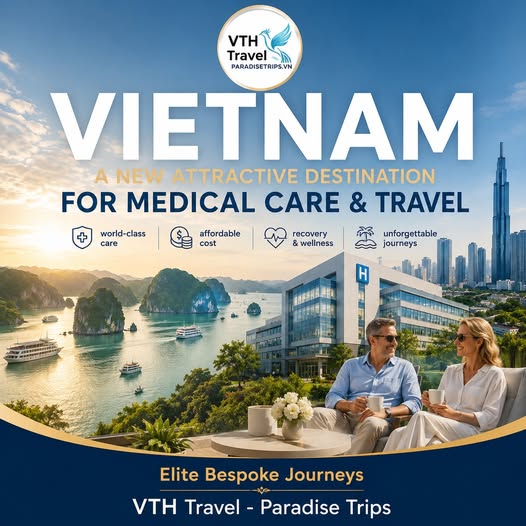
19/08/2026Medical Tourism in Vietnam: Asia’s Emerging Healthcare Hub
Medical Tourism in Vietnam: Asia’s Emerging Healthcare Hub Vietnam is rapidly evolving beyond its reputation as a breathtaking holiday destination. Driven by strategic investments in healthcare infrastructure, an influx of internationally trained specialists, modern medical technologies, and a renowned culture […]

PRACTICAL TRAVEL INFO
11/08/2026Truth About Room Tiers & Meals in Vietnam Tour Packages
Why Lead-in Package Rates Protect Your Budget & Flexible Meals Unlock Ultimate Freedom By Dr. Son & Team – Luxury Vietnam DMC SPECIAL OUTLINE ABOUT VIETNAM TOUR PACKAGE PRICING The Sample Itinerary Misunderstanding: Why a sample tour is a baseline reference, not a rigid cage. Pillar 1: Demystifying Hotel & Cruise Room Tiers: Real-world price […]
PRACTICAL TRAVEL INFO
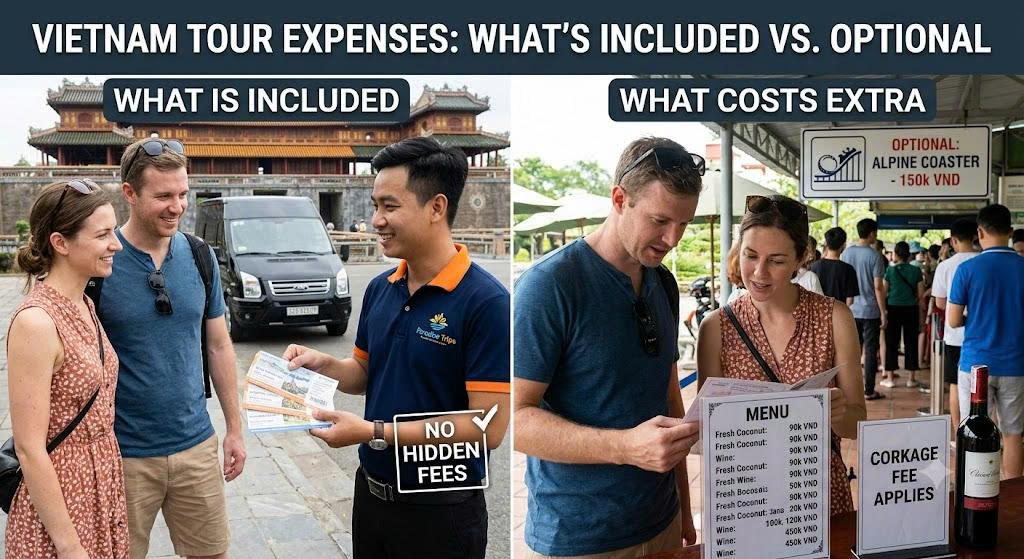
10/08/2026Vietnam Tour Hidden Fees: What Costs Extra and Why
The Truth Behind “No Hidden Fees”: Why You May Still See Paid Services Inside Attractions, Restaurants, Cruises, and Resorts in Vietnam One of the most common questions we receive from international travelers booking a private tour is: “If your package promises no […]