- TRAVEL PACKAGES
- BESPOKE JOURNEYS
- TOP TOURS
- Daily Tours
- PRACTICAL TRAVEL INFO
- DISCOVER VIETNAM
- PARTNER WITH US
18-06-2025
Since the nation embraced international tourism, the Traditional Vietnamese Cyclo Ride has gracefully pedaled into the hearts of visitors, becoming an iconic symbol of the country’s travel industry. More than just a mode of transport, this three-wheeled pedicab—locally known as xích lô—is a quiet testament to a bygone era. From the vibrant boulevards of Saigon to the ancient, narrow alleys of Hoi An and Hanoi, the Traditional Vietnamese Cyclo Ride offers an intimate perspective that no car or bus can match. Gliding at a relaxed pace, it allows travelers to truly connect with the sights, sounds, and scents of the S-shaped land, creating unforgettable memories of a unique national icon.

The cyclo’s history in Vietnam dates back to 1939, when it was first introduced by a French man named P. Mignon. Initially, cyclos were adopted by the elite and wealthy as a more elegant and private mode of transport than rickshaws. Over time, as their use spread, cyclos became an essential and ubiquitous part of urban life, moving people and goods across the bustling streets of Vietnamese cities. They stand as a quiet testament to a bygone era, yet continue to charm in the modern day.
Known locally as “xích lô”, the cyclo is also often referred to in English as a pedicab, cycle rickshaw, or bike taxi.
Just as Thailand proudly boasts its Tuk Tuk and the Philippines its vibrant Jeepney, the Vietnamese cyclo holds a unique place in the nation’s identity. These charming three-wheeled wonders offer both local and international travelers a leisurely way to:

Imagine gently gliding through tree-lined boulevards, soaking in the local atmosphere, and capturing stunning photographs without the confines of a car window. A cyclo ride provides an intimate perspective, allowing you to truly connect with the sights, sounds, and even the scents of Vietnam. You might pass by:
All this happens at a relaxed and enjoyable pace, making for truly unforgettable memories.
The price for this unique experience generally ranges from 100,000 to 200,000 VND per person, varying slightly depending on the location and the duration of the ride. While this offers a relatively affordable way to explore, it’s important to remember the effort involved for the cyclo drivers.
Operating a cyclo, especially under the tropical Vietnamese sun, is a physically demanding job. If you’ve enjoyed your ride and appreciate the driver’s efforts in making your sightseeing memorable, a tip of 50,000 to 100,000 VND, or whatever you feel comfortable with, is a kind gesture. However, please know that tipping is entirely at your discretion. Regardless of whether you choose to tip, a warm smile and a sincere word of thanks are always appreciated and contribute to a positive exchange between traveler and driver.

The Vietnamese cyclo is more than just a mode of transport; it’s a charming step back in time, a unique cultural experience, and a delightful way to connect with the heart and soul of Vietnam’s captivating cities. So, on your next visit, be sure to hop on a cyclo and create lasting memories as you pedal through the beauty of Vietnam.
The historical introduction of the Traditional Vietnamese Cyclo Ride in 1939 marks a fascinating intersection of French influence and local adaptation. For a deeper look at the evolution of urban transportation in former Indochina, the archives of the National Overseas Archives (ANOM) provide rare insights into the colonial era.
Furthermore, the cyclo is increasingly recognized as a form of “sustainable tourism.” Global travel authorities like TripAdvisor frequently rank the Traditional Vietnamese Cyclo Ride as a “Top Cultural Experience,” highlighting its eco-friendly nature and its role in supporting the livelihoods of local veteran drivers. For travelers interested in how such icons shape the national identity, the UNESCO Intangible Cultural Heritage platform offers a broader context on preserving “living traditions” in modern, bustling Asian metropolises.
#VietnameseCyclo #VietnamTravel #CulturalExperience #ExploreVietnam #HanoiCyclo #HoiAnTravel #HoChiMinhCity #UniqueTransportation #SoutheastAsia #TravelVietnam
Latest news

Health & Safety
19/08/2026Medical Tourism in Vietnam: Asia’s Emerging Healthcare Hub
Medical Tourism in Vietnam: Asia’s Emerging Healthcare Hub Vietnam is rapidly evolving beyond its reputation as a breathtaking holiday destination. Driven by strategic investments in healthcare infrastructure, an influx of internationally trained specialists, modern medical technologies, and a renowned culture […]

PRACTICAL TRAVEL INFO
11/08/2026Truth About Room Tiers & Meals in Vietnam Tour Packages
Why Lead-in Package Rates Protect Your Budget & Flexible Meals Unlock Ultimate Freedom By Dr. Son & Team – Luxury Vietnam DMC SPECIAL OUTLINE ABOUT VIETNAM TOUR PACKAGE PRICING The Sample Itinerary Misunderstanding: Why a sample tour is a baseline reference, not a rigid cage. Pillar 1: Demystifying Hotel & Cruise Room Tiers: Real-world price […]
PRACTICAL TRAVEL INFO
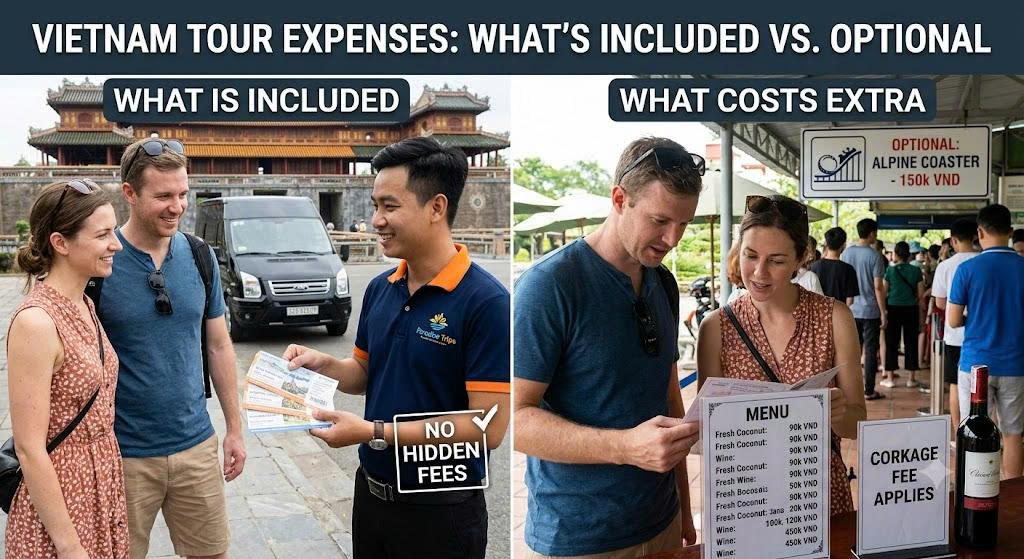
10/08/2026Vietnam Tour Hidden Fees: What Costs Extra and Why
The Truth Behind “No Hidden Fees”: Why You May Still See Paid Services Inside Attractions, Restaurants, Cruises, and Resorts in Vietnam One of the most common questions we receive from international travelers booking a private tour is: “If your package promises no […]