- TRAVEL PACKAGES
- BESPOKE JOURNEYS
- TOP TOURS
- Daily Tours
- PRACTICAL TRAVEL INFO
- DISCOVER VIETNAM
- PARTNER WITH US
12-07-2025
The Vietnamese language and civilization have evolved over nearly 5,000 years, standing proudly as one of humanity’s earliest cradles of culture. From the ancient Hùng Kings to the modern era, the language has become a vivid symbol of national identity. It is a unique fusion of indigenous roots and refined elements absorbed from major civilizations like China, India, and the West.
This in-depth exploration unveils the captivating story of Vietnam’s linguistic resilience and its vibrant cultural soul.
Get an immediate grasp of our article’s core and structure through these key highlights:
I. A Glorious History: From the dawn of nation-building to the wet-rice civilization.
II. Vietnamese – The Soul of the Nation: Formation, characteristics, and cultural interplay.
III. Spoken and Written Vietnamese: A debated journey of script (Chữ Hán & Chữ Nôm).
IV. Quốc ngữ and the Modern Alphabet: Origins, structure, and the role of Alexandre de Rhodes.
V. Cultural Identity Through Language: Language as a bridge to preserve and promote cultural values.
VI. The Importance of Vietnamese Today: Preserving and developing the language globally.
VII. Linguistic Diversity of 54 Ethnic Groups: Respecting and preserving identity.

DISCOVER THE FASCINATING JOURNEY OF VIETNAM’S LANGUAGE AND CULTURE, FROM ANCIENT ROOTS TO GLOBAL RECOGNITION!
Vietnam, first known as Văn Lang under the Hùng Kings, has endured thousands of years of glorious nation-building. According to Wikipedia’s records on the Bronze Age, the Đông Sơn bronze drums symbolize a vibrant wet-rice civilization.
Wet-rice culture: Influenced agriculture, beliefs, and festivals.
Patriotism: Forged through thousands of years of struggle.
Village system: The basic structure preserving traditional values.
When you visit, a simple “Xin chào!” (Hello!) can start many interesting conversations.
Note: To learn more about Ethnic Groups in Vietnam, please Click Here
Vietnamese belongs to the Austroasiatic language family. Its richness comes from the ability to absorb elements from various major civilizations:
Influence from China: Absorbed Sino-Vietnamese words for academic and administrative fields.
Imprint from India: Reflected in terms related to Buddhism and philosophy.
Reception from the West: Adopted the Latin alphabet, creating a scientific writing system.
As an isolating language with 6 tones, it is flexible and melodious. If you want to show care, ask “Bạn có khỏe không?” (How are you?).
Language exists in two main forms: spoken and written.
Spoken language: Vietnamese has been the natural means of communication throughout all periods.
Written language: During feudal times, Chữ Hán (Chinese characters) were used alongside Chữ Nôm—a complex script created by Vietnamese people to record their mother tongue, as recognized by UNESCO as a testament to cultural resilience.
Quốc ngữ is the official writing system today, built upon the Latin alphabet.
Origins: Credited to missionary Alexandre de Rhodes, who published the first dictionary in 1651.
The Alphabet: Consists of 29 letters. It does not use F, J, W, or Z in native words.
Vowels (12): A, Ă, Â, E, Ê, I, O, Ô, Ơ, U, Ư, Y
Consonants (17): B, C, D, Đ, G, H, K, L, M, N, P, Q, R, S, T, V, X
Unique feature: It is spelled exactly as it is spoken, making learning much more convenient.
Language is a mirror reflecting a nation’s soul. Vietnamese carries spiritual values across generations:
Folk songs & proverbs: A treasure trove of folk wisdom and ethics.
Literature: The medium for conveying history and aspirations.
Forms of address: Reflecting social hierarchy and family bonds.
After a delicious meal, saying “Ngon quá!” (Delicious!) will surely please your host.
In the context of globalization, Vietnamese is a bridge for generations worldwide. Many countries now recognize its potential:
United States: Harvard, Yale, UCLA, Cornell, Berkeley.
France: INALCO, Paris Cité University.
Australia: ANU, Monash University.
Other regions: Russia (MSU), South Korea (SNU), Japan (Osaka Uni), and China (Peking Uni).
Note: To know about a list of Elite Vietnamese People, please Click Here
While Vietnamese is the National Language, the Constitution guarantees the rights of all 54 ethnic groups to maintain their own languages.
Bilingual education: Researching and teaching ethnic scripts.
Maintenance of traditions: Encouraging festivals, costumes, and customs.
Equality: All ethnic groups are treated equally, creating a united and colorful nation.
#Vietnam #VietnameseHistory #VietnameseLanguage #VietnameseCulture #NationalIdentity #QuocNgu #LearnVietnamese #EthnicDiversity #CulturalExchange
Latest news
Health & Safety
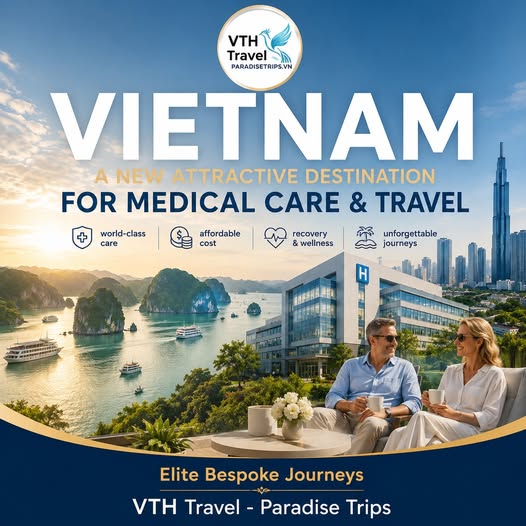
19/08/2026Medical Tourism in Vietnam: Asia’s Emerging Healthcare Hub
Medical Tourism in Vietnam: Asia’s Emerging Healthcare Hub Vietnam is rapidly evolving beyond its reputation as a breathtaking holiday destination. Driven by strategic investments in healthcare infrastructure, an influx of internationally trained specialists, modern medical technologies, and a renowned culture […]

PRACTICAL TRAVEL INFO
11/08/2026Truth About Room Tiers & Meals in Vietnam Tour Packages
Why Lead-in Package Rates Protect Your Budget & Flexible Meals Unlock Ultimate Freedom By Dr. Son & Team – Luxury Vietnam DMC SPECIAL OUTLINE ABOUT VIETNAM TOUR PACKAGE PRICING The Sample Itinerary Misunderstanding: Why a sample tour is a baseline reference, not a rigid cage. Pillar 1: Demystifying Hotel & Cruise Room Tiers: Real-world price […]
PRACTICAL TRAVEL INFO
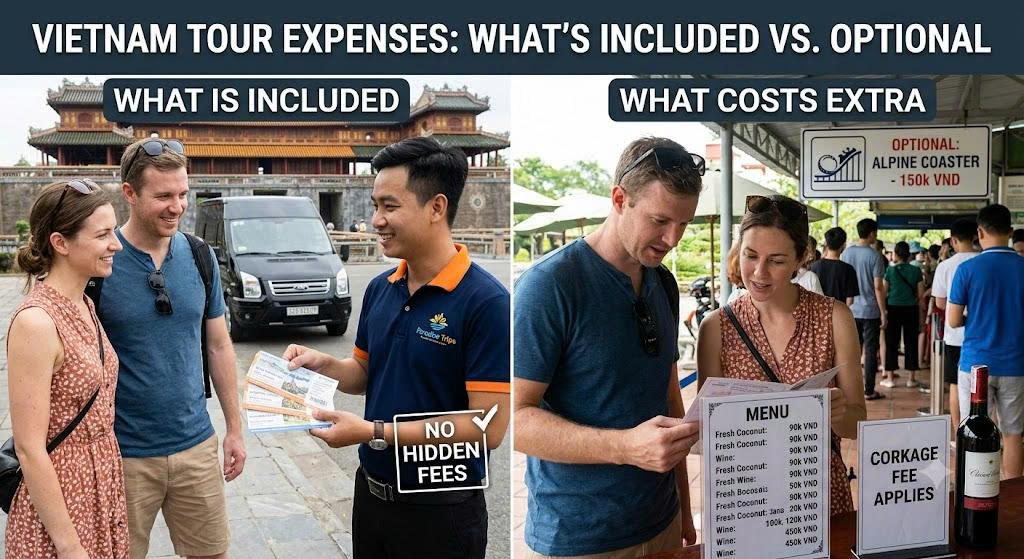
10/08/2026Vietnam Tour Hidden Fees: What Costs Extra and Why
The Truth Behind “No Hidden Fees”: Why You May Still See Paid Services Inside Attractions, Restaurants, Cruises, and Resorts in Vietnam One of the most common questions we receive from international travelers booking a private tour is: “If your package promises no […]