- TRAVEL PACKAGES
- BESPOKE JOURNEYS
- TOP TOURS
- Daily Tours
- PRACTICAL TRAVEL INFO
- DISCOVER VIETNAM
- PARTNER WITH US
20-06-2025
In the heart of the S-shaped land, family gatherings and community festivals are incomplete without the distinct flavors of locally crafted spirits. Vietnamese Traditional Wine Tasting offers far more than a beverage; it is a journey into a nation’s soul. From the high-altitude corn wine of the northern peaks to the communal Rượu Cần of the Central Highlands, these spirits are forged through generations of ancestral wisdom. Historically, ethnic minority communities have relied on natural forest leaf-yeast (men lá) to ferment indigenous grains, creating a diverse heritage of flavors. Whether distilled or fermented in earthenware jars, Vietnamese Traditional Wine Tasting reveals the artisan’s skill, where the quality of grain and the precision of fermentation converge to create a liquid testament to hospitality and resilience.

Beyond the common rượu ngô, rượu gạo, and rượu sắn, Vietnam also boasts a rich diversity of traditional wines unique to various ethnic minorities, each carrying its own distinct flavor and story:

Note: To unlock the Art of Vietnamese Ceramic & Pottery, please click here!
While the prominence of traditional Vietnamese wine has waned somewhat in larger urban centers due to the availability of diverse beverages and stricter drink-driving laws, it continues to hold significant cultural importance in rural mountain villages.

Note: To unlock the Heart of the Lunar New year in Vietnam, please click here!
Explore the rich heritage and unique flavors of traditional Vietnamese country wine – a true taste of Vietnam’s cultural identity. It’s more than just a drink; it’s a piece of the nation’s soul, intertwined with daily life, festivals, and the customs of each region.

Note: To explore the historical relics in Vietnam, please click here!
Vietnamese traditional wine, far more than just a drink, is a profound expression of the nation’s rich cultural tapestry. It’s a flavorful companion to joyous family gatherings, an indispensable element in sacred ancestral rituals, and a vibrant symbol of unity and camaraderie during festivals across the country. These unique spirits, whether the communal rượu cần or the robust rượu ngô, beautifully encapsulate local heritage and the warmth of Vietnamese hospitality.
However, as with any potent delight, mindful consumption is key. While celebrating the deep cultural significance and delicious taste of these traditional wines, it’s crucial to remember that moderation is paramount. Overindulgence can pose serious risks to personal health and, critically, jeopardize road safety. Enjoy Vietnam’s treasured liquid heritage responsibly, savoring its essence without compromising your well-being or the safety of others.
The cultural weight of Vietnamese Traditional Wine Tasting is recognized as an integral part of the nation’s intangible heritage. The Vietnam Museum of Ethnology provides extensive exhibits on the traditional fermentation tools used by different ethnic groups.
Furthermore, the botanical complexity of forest leaf-yeast is a subject of study for the World Intellectual Property Organization (WIPO) regarding the protection of traditional knowledge. For travelers seeking a safe and authentic experience, the Vietnam National Administration of Tourism (VNAT) offers guides on heritage craft villages. Additionally, the World Health Organization (WHO) provides global guidelines on responsible alcohol consumption, which aligns with Vietnam’s modern “Drink-Drive” regulations (Decree 100) to ensure that the beauty of Vietnamese Traditional Wine Tasting is enjoyed safely and sustainably in the 21st century.
#VietnameseTraditionalWine #VietnameseWineCulture #RiceWineVietnam #CornWineVietnam #CassavaWineVietnam #RuouCan #EthnicMinorityWine #VietnameseCuisine #TraditionalFestivals #SpecialtyDrinks #CulinaryHeritage #VietnamCulture #TravelVietnam #CulturalHeritage #HomebrewedWine #MountainousVietnam
Note: To discover the list of Top 10 most beautiful beaches in Vietnam, please click here!
Latest news

Health & Safety
19/08/2026Medical Tourism in Vietnam: Asia’s Emerging Healthcare Hub
Medical Tourism in Vietnam: Asia’s Emerging Healthcare Hub Vietnam is rapidly evolving beyond its reputation as a breathtaking holiday destination. Driven by strategic investments in healthcare infrastructure, an influx of internationally trained specialists, modern medical technologies, and a renowned culture […]

PRACTICAL TRAVEL INFO
11/08/2026Truth About Room Tiers & Meals in Vietnam Tour Packages
Why Lead-in Package Rates Protect Your Budget & Flexible Meals Unlock Ultimate Freedom By Dr. Son & Team – Luxury Vietnam DMC SPECIAL OUTLINE ABOUT VIETNAM TOUR PACKAGE PRICING The Sample Itinerary Misunderstanding: Why a sample tour is a baseline reference, not a rigid cage. Pillar 1: Demystifying Hotel & Cruise Room Tiers: Real-world price […]
PRACTICAL TRAVEL INFO
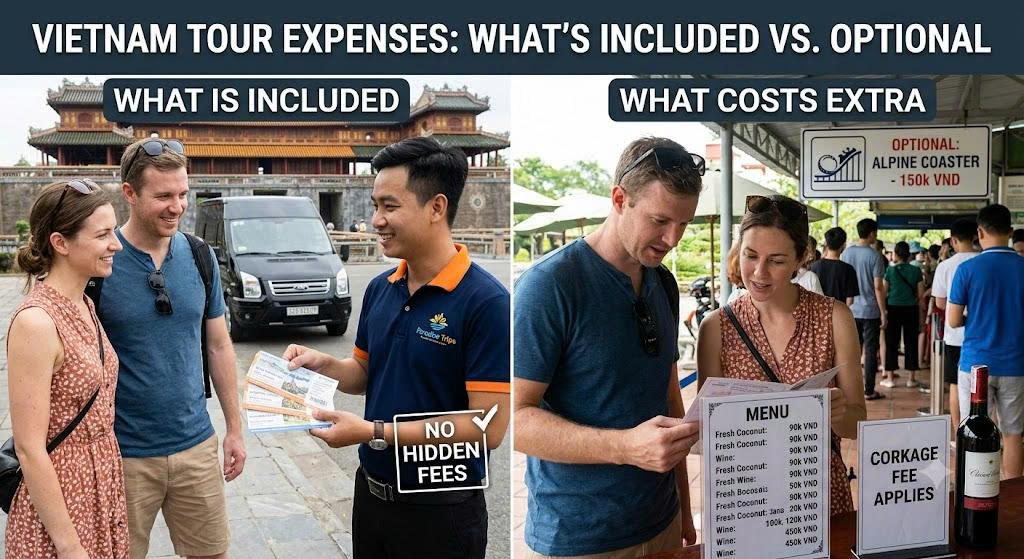
10/08/2026Vietnam Tour Hidden Fees: What Costs Extra and Why
The Truth Behind “No Hidden Fees”: Why You May Still See Paid Services Inside Attractions, Restaurants, Cruises, and Resorts in Vietnam One of the most common questions we receive from international travelers booking a private tour is: “If your package promises no […]